
Soft-Close vs Telescopic Drawer Slides: Which One Does Your Kitchen Need?
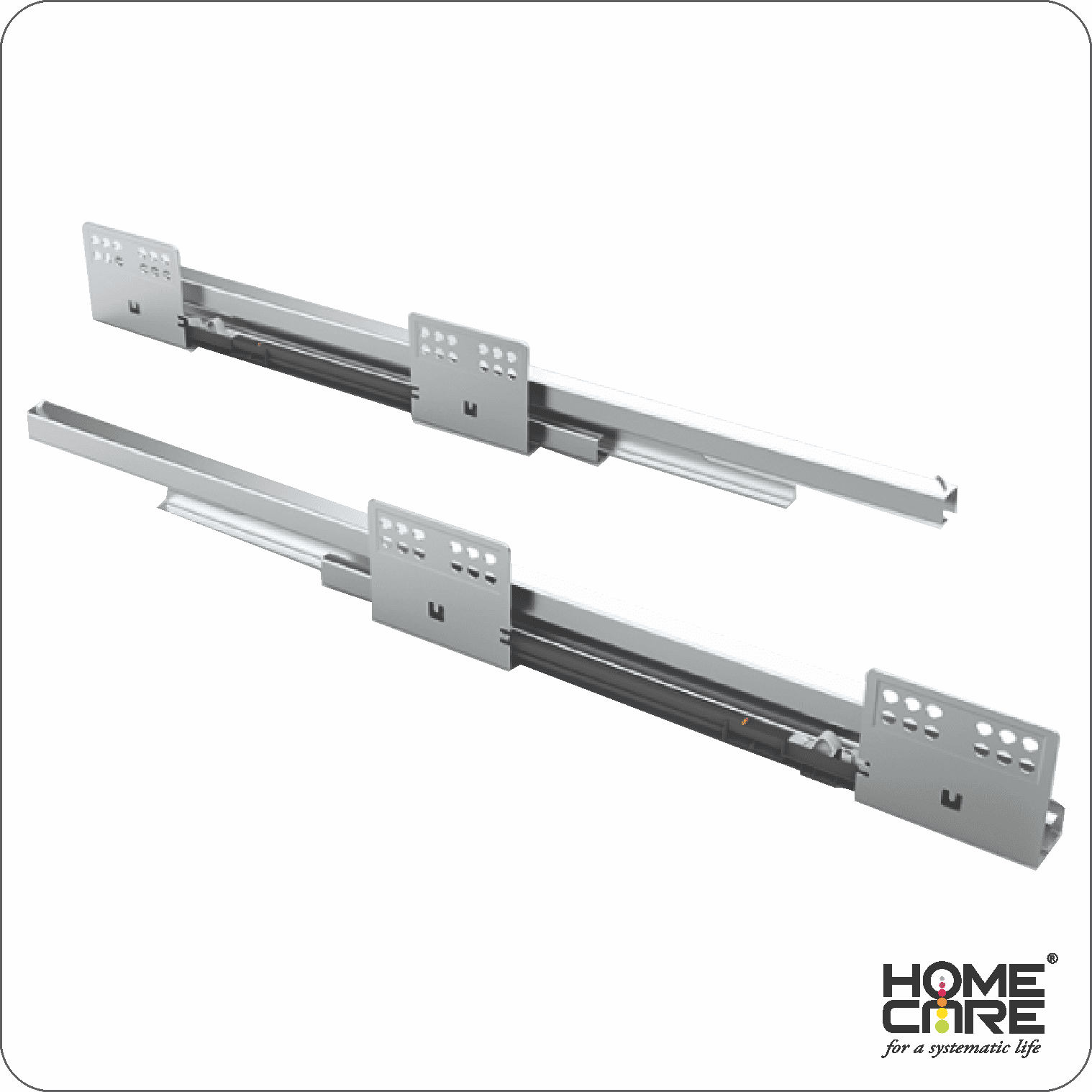
Soft-close and telescopic drawer slides look alike but close very differently. Learn how each works, which kitchen drawers need soft-close, how to choose the right slide length, and simple installation tips.
Quick answer: A telescopic (ball-bearing) slide lets a drawer pull out smoothly and fully, but it closes only as hard as you push it. A soft-close slide is a telescopic slide with a built-in damper that catches the drawer in the last few centimetres and pulls it shut slowly and quietly. For kitchen drawers that carry plates, thalis and cutlery, soft-close is the better choice. Plain telescopic slides suit light, less-used drawers where budget matters most.
What is a telescopic drawer slide?
A telescopic slide, also called a ball-bearing channel, is a set of steel rails that slide inside each other on rows of small steel balls. One rail is fixed to the side of the cabinet and the other to the side of the drawer. When you pull the drawer, the rails extend in stages, like a telescope, which is where the name comes from.
Most kitchen telescopic slides are full extension, so the whole drawer comes out of the cabinet and you can reach the items at the back. They are strong, smooth and easy to replace, which is why they are the standard choice for modular kitchen and wardrobe drawers.
The limitation is the closing action. A plain telescopic slide has no brake. If the drawer is pushed hard, it hits the cabinet with a bang, and heavy steel utensils inside rattle with every close.
What is a soft-close drawer slide?
A soft-close slide works like a telescopic slide when you open it. The difference is a small damper mechanism built into the rail. As the drawer reaches the last part of its travel, the damper catches it and draws it closed at a slow, controlled speed, no matter how hard it was pushed.
This gives three practical benefits in an Indian kitchen:
- No slamming, so cabinet shutters, joints and the drawer front last longer.
- Less noise from steel plates, katoris and cutlery moving inside the basket.
- Fewer pinched fingers, which matters in homes with children.
Home Care introduced its own soft-close slides in 2012 under the Home Care Silk Move name.
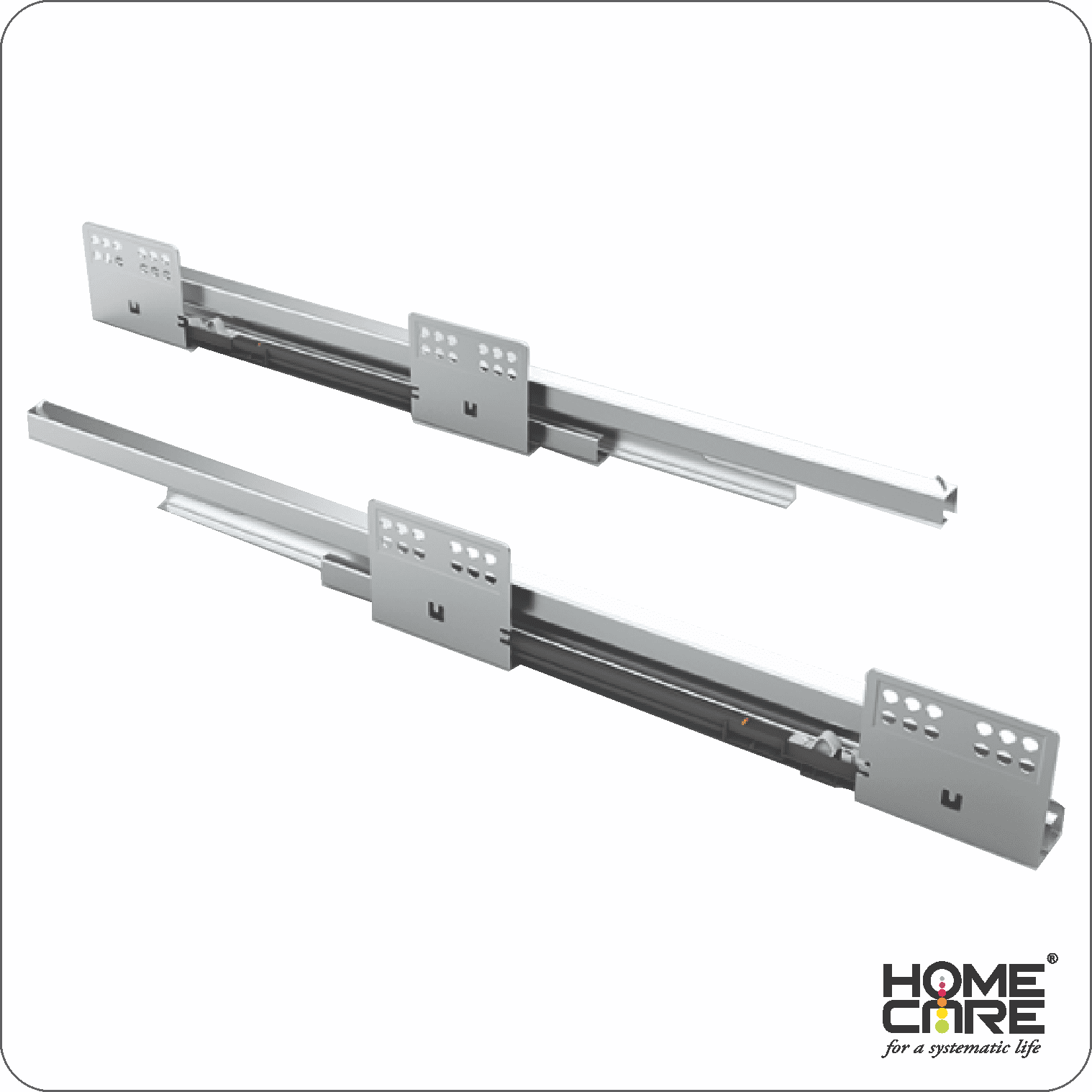
Soft-close vs telescopic slides: side-by-side
| Feature | Telescopic (ball-bearing) slide | Soft-close slide |
|---|---|---|
| Opening | Smooth, usually full extension | Smooth, usually full extension |
| Closing | Closes at the speed it is pushed | Damper slows the drawer and closes it gently |
| Noise | Can bang when pushed hard | Quiet, controlled close |
| Wear on cabinet | Repeated impact on shutters and joints | Much less impact, longer cabinet life |
| Safety | Fingers can get caught in a fast close | Slow close reduces pinching |
| Cost | Lower | Higher, because of the damper |
| Best for | Light, occasional-use drawers | Daily-use and heavy kitchen drawers |
Which drawers need soft-close, and where is telescopic enough?
Choose soft-close for
- Plate and thali baskets. They are heavy and opened many times a day. See the plate and thali basket range.
- Cutlery and cup-saucer baskets. Soft-close stops spoons and cups from sliding around on every close. See cutlery baskets.
- Glass baskets. A gentle close protects the glass panels. Browse glass baskets.
- Drawers near the hob or sink, where you open and close drawers with one hand while cooking.
A plain telescopic slide is fine for
- Utility drawers for cleaning supplies that are opened a few times a week.
- Light storage in wardrobes and study units.
- Projects where the budget is tight and the drawer will carry light items.
How to choose the right slide length
Slides are sold by length, usually in inches, and the right length depends on the inside depth of your cabinet, not the width.
- Measure the clear inside depth of the cabinet, from the inner face of the front frame to the back panel.
- Choose the longest slide that fits within that depth, leaving a small gap at the back.
- Check the side clearance. Most ball-bearing slides need a fixed gap between the drawer side and the cabinet side, commonly about 12.5 mm on each side. The exact figure is in the technical drawing for each slide.
- Check the load rating on the product page against what the drawer will hold. A plate basket full of steel thalis needs a stronger slide than a drawer of kitchen towels.
Home Care shares technical drawings for its products, so your carpenter can plan clearances before cutting the drawer.
Installation tips for a smooth, long-lasting drawer
- Keep both rails level and parallel. Even a small tilt makes a drawer drag or close unevenly.
- Use all the screw holes recommended for the slide. Loose screws are the most common reason a drawer starts to sag.
- Test the close before loading the basket. A soft-close slide should catch and pull the empty drawer shut on its own.
- Do not oil the damper. Wipe the rails with a dry cloth to remove dust. Oil attracts dirt into the ball race.
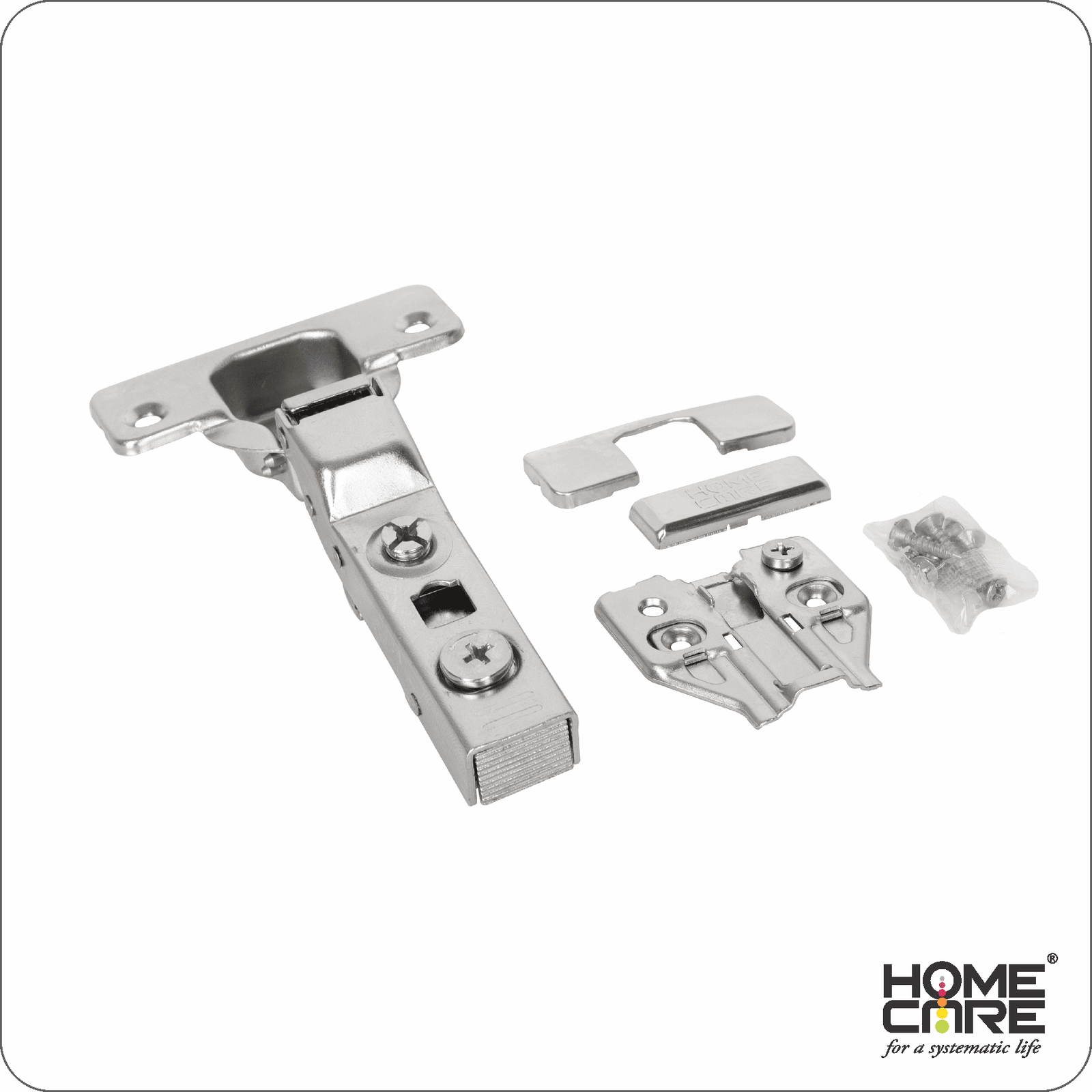
Match your drawers with your shutters
A kitchen feels finished when every moving part behaves the same way. If your drawers close softly but the cabinet shutters still bang, the difference is easy to notice. Home Care offers soft-close hydraulic hinges alongside its telescopic slides and soft-close slides, so you can plan the full set of hardware from one manufacturer.
Key takeaways
- Every soft-close slide is a telescopic slide, but not every telescopic slide is soft-close.
- Pick soft-close for heavy, daily-use kitchen drawers and glass baskets.
- Plain telescopic slides are a sensible saving for light, occasional-use drawers.
- Choose slide length by cabinet depth and check the side clearance in the technical drawing.
Frequently asked questions
Can I convert a telescopic slide into a soft-close slide?
Usually the simplest and most reliable option is to replace the pair of slides with soft-close slides of the same length. Add-on soft-close units exist, but they do not always match every slide or cabinet.
Are soft-close slides strong enough for steel plate baskets?
Yes, when you choose a slide whose load rating matches the basket and its contents. Check the rating on the product page and ask the Home Care team if you are unsure.
Which slide length is used in most kitchen base cabinets?
It depends on the cabinet depth. Measure the inside depth and choose the longest slide that fits. Your carpenter can confirm the size using the technical drawing for the slide.
Why does my soft-close drawer not close fully?
The most common reasons are rails that are not level, a drawer that is too wide or too narrow for the side clearance, or an overloaded drawer. Re-check the alignment and clearances first.
Where can I see Home Care slides before buying?
You can see the range at the Home Care showroom, browse the catalogues, or send an enquiry with your cabinet sizes.
Planning a new kitchen or upgrading old drawers? Send us your cabinet sizes and we will suggest the right slides, baskets and hinges. Send an enquiry or download the catalogue.